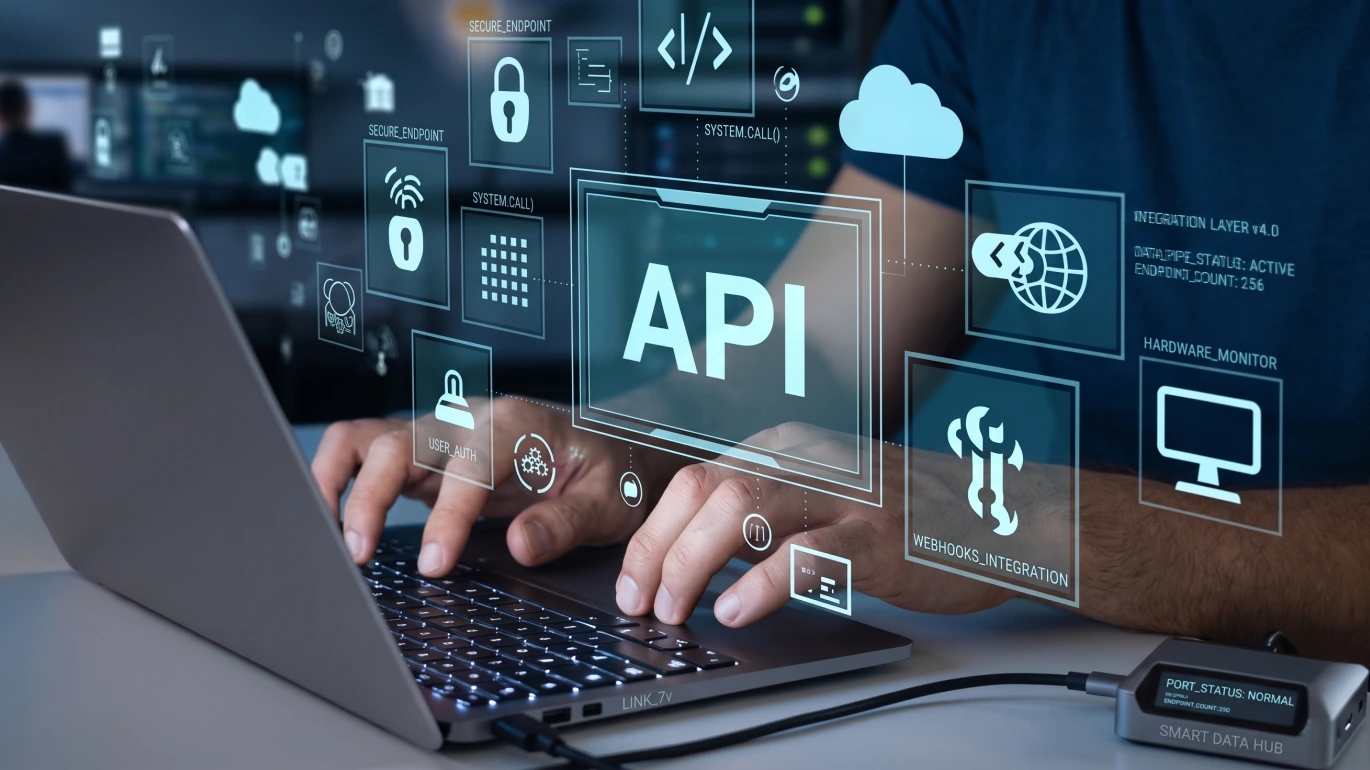
Almost no business runs on a single piece of software anymore. A typical company juggles a CRM, an accounting package, an e-commerce platform, a payment provider, and a handful of internal tools — and every one of those systems holds data the others need. "API-first" is simply the discipline of designing that data exchange deliberately, instead of letting it happen through manual exports, spreadsheets, and copy-paste.
We see the cost of skipping this step constantly: sales teams working from CRM data that's a day out of date, finance reconciling numbers by hand because the e-commerce platform and the accounting system don't talk to each other, and support staff switching between three tools to answer one customer question. Each of these is an integration problem, not a people problem.
What "API-First" Actually Means in Practice
In practice, API-first means designing clear data contracts between systems, using secure authentication such as OAuth2 or scoped API keys, and building in monitoring so a broken integration is caught in minutes, not discovered weeks later when a report doesn't add up. It also means thinking about integration before a system is built, not bolting it on afterward.
Most "we need better reporting" requests are actually "our systems don't talk to each other" problems wearing a different name.
- Design data mapping between systems before writing integration code.
- Use secure, scoped authentication for every connected system.
- Add monitoring and alerting so integration failures are caught early.
- Document the data contract so future changes don't break silently.
- Treat third-party API changes as an expected event, not an emergency.
This is exactly how we approach API integration at Miya Software Solutions — connecting CRMs, ERPs, payment gateways, and custom platforms like our own MI4S and MI4A modules to the other systems our clients depend on, backed by the same database management and networking expertise that keeps those connections reliable over time.